Meta’s Reality Labs Division Spins Off as Independent Company Amid VR Market Slowdown
By Swift Digest Editorial | March 15, 2026
In a stunning reversal of its metaverse-first strategy, Meta announced today that it will spin off its Reality Labs division into an independent company, effectively admitting that its $100+ billion bet on virtual and augmented reality has failed to deliver the transformative results CEO Mark Zuckerberg promised just four years ago.
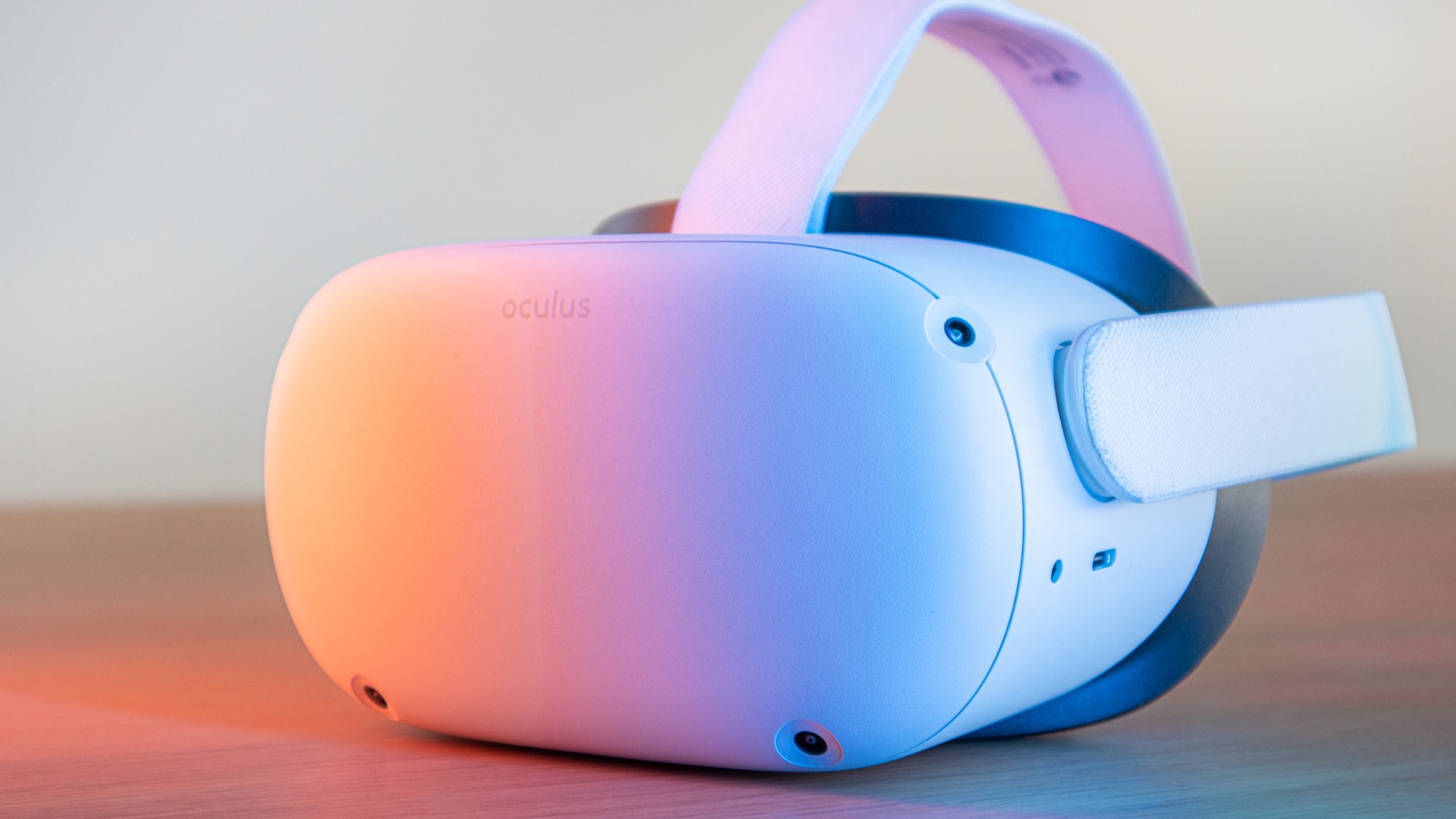
The decision comes as VR headset sales have plateaued globally, with industry analysts reporting that consumer adoption rates have stagnated at around 3% of households—far below the 20% penetration Meta had projected for 2026. The spinoff will create “Horizon Technologies,” an independent entity that will retain the Quest headset line, Horizon Worlds platform, and all AR/VR research operations.
The Numbers Don’t Lie
Reality Labs has hemorrhaged cash since Meta’s pivot to the metaverse began in 2021. The division reported operating losses of $18.7 billion in 2025 alone, bringing total losses since 2020 to over $80 billion. Meanwhile, Meta’s core social media advertising business—Facebook, Instagram, and WhatsApp—generated $142 billion in revenue last year, subsidizing the VR experiments that investors increasingly viewed as a distraction.
“The market has spoken clearly,” said Jessica Chen, senior analyst at TechInsight Research. “VR remains a niche product for gaming enthusiasts and enterprise applications. The mass consumer adoption that would justify Meta’s massive investment simply hasn’t materialized.”
The announcement sent Meta’s stock soaring 12% in after-hours trading, with investors celebrating the company’s return to its profitable roots. Conversely, several VR industry ETFs dropped significantly as markets interpreted the move as a signal that even the most well-funded player in the space was retreating.
What Went Wrong?
Meta’s metaverse ambitions faced multiple headwinds that proved insurmountable. Despite significant improvements in hardware quality and reductions in headset prices—the Quest 4 launched at $299 in late 2025—consumer adoption remained sluggish. Users cited persistent issues with motion sickness, limited content libraries, and the social awkwardness of extended VR sessions as primary barriers.
The enterprise market, initially seen as a potential growth driver, also disappointed. While companies adopted VR for specific use cases like training simulations and remote collaboration, the broad workplace transformation that Meta envisioned never materialized. Microsoft’s HoloLens and Apple’s Vision Pro captured most enterprise deployments, leaving Quest devices primarily in the consumer gaming segment.
“We underestimated the time horizon for mass VR adoption,” Zuckerberg admitted during today’s investor call. “The technology is incredible, but consumer behavior changes more slowly than we anticipated. By spinning off Reality Labs, we’re giving both our social platforms and our VR innovations the focused attention they deserve.”
The New Landscape
Horizon Technologies will launch with $15 billion in funding from Meta and external investors, including Sony, NVIDIA, and several sovereign wealth funds. The company will be led by Andrew Bosworth, Meta’s current CTO, who spearheaded much of the Reality Labs development over the past five years.
“This isn’t a retreat—it’s a strategic evolution,” Bosworth said in a statement. “As an independent company, we can move faster, partner more broadly, and focus exclusively on advancing spatial computing without the quarterly earnings pressure of a public company.”
The spinoff also creates interesting competitive dynamics. Apple’s Vision Pro, while expensive at $3,499, has carved out a premium segment focused on productivity and mixed reality. Google recently re-entered the AR space with its Glass Enterprise 3.0, targeting specific industry verticals. Meanwhile, ByteDance’s Pico division continues to grow in Asian markets, suggesting geographic preferences may fragment the global VR landscape.
Implications for Meta
For Meta, the spinoff represents both a pragmatic business decision and an acknowledgment that the company’s core competency remains social networking, not hardware manufacturing. The move allows Meta to redirect resources toward AI development, creator tools, and international expansion—areas where the company faces intense competition from TikTok, YouTube, and emerging platforms.
“Meta is essentially admitting that it’s a software company, not a hardware company,” noted Daniel Rodriguez, a technology strategist at Meridian Capital. “This refocusing could actually strengthen their position in social media while allowing Reality Labs to find its own path without Wall Street breathing down their necks every quarter.”
The decision also raises questions about the broader metaverse concept. While gaming companies like Epic Games and Roblox continue to build virtual worlds with hundreds of millions of users, the vision of photorealistic VR environments replacing physical interactions appears increasingly distant.
Looking Forward
Industry experts predict the VR market will continue growing, but at a more measured pace than Meta’s ambitious projections suggested. Enterprise applications, fitness gaming, and social VR experiences will likely drive adoption over the next decade, while the consumer breakthrough moment may still be years away.
For Horizon Technologies, independence offers both opportunities and challenges. The company inherits world-class VR technology and a established user base of 15 million monthly Quest users. However, it also faces the daunting task of achieving profitability in a market that has proven resistant to rapid growth.
Meta’s retreat from the metaverse marks the end of one of tech’s most ambitious—and expensive—experiments. Whether this signals a broader cooling of VR investments or simply a necessary recalibration remains to be seen. What’s certain is that the spatial computing revolution will likely unfold more gradually than its most vocal proponents predicted.